Showing posts with label summer camp. Show all posts

Wednesday, September 9, 2015

4 Questions to Help You Assess: Is My Child Old Enough for Summer Camp?

Parents often wonder if their children are old enough to go to a sleep-away camp. Beyond the obvious “it depends” consider these situations I’ve seen.


  • Two girls first attended camp for 3 1/2 weeks as 6-year olds, and returned to camp enthusiastically for many years.
  • A 7-year old came for a week and was exceedingly homesick.  She returned 2 years later and flourished.
  • A 6-year old camper was not at all homesick, but wasn’t able to participate in a large group setting where she needed to follow rules.  She returned at age 8 and enjoyed an outstanding summer.
  • An 11-year old came to camp for the very first time for seven weeks. She appeared timid when she arrived, yet after one week in a cabin she wholeheartedly embraced all aspects of camp and thoroughly enjoyed camp.
  • An 8-year old came to camp knowing only minimal English.  The girl was homesick the first two nights, but otherwise smiled broadly, made friends and her English improved dramatically.

The success of each camper was less age-dependent and more aligned with the child’s independence, his or her ability to participate in a group and the signals a parent sent to his or her child.

Mull over these four questions as you consider if your child is ready for summer camp:

  1. Has your child successfully completed a sleepover away from home?
  2. Can your child participate in a group without having attention focused solely on him and his needs?  Camp is a place where everyone takes turns clearing the dining table, each camper helps keep the cabin neat, swimming is only allowed at designated times and other group norms are necessary.
  3. Can your child be reasonably quiet for an extended rest time and after taps?
  4. Are you as a parent comfortable supporting your child and letting her try out her own wings without your constant vigilance?

These aren’t meant to be yes or no questions, as each can be enhanced just by being at camp.  But if your child has gone to several sleepovers and each time the host parent has called at 11 p.m. for you to pick up your son, he may not yet be ready for camp.  Or if your child is 6 or 7 and hasn’t yet learned how to participate as a member of a group, then you may want to wait a year before you register her.

On the other hand, a child doesn’t need to be pleading to go to summer camp.  A timid child may enthusiastically embrace camp. 


A family who offers positive encouragement and a child who is able to learn how to cooperate in a group is ready for the gift of sleep-away summer camp.

Saturday, August 15, 2015

You're Magical

The five seven- and eight-year olds giggled racing up the path to the archery field. I tried without success to keep up. Out of breath when I arrived, I took a seat beside the archery counselor, the five newest archers arrayed in front of us. 

I had reminded all five girls before heading up to the archery field that they needed to tie their hair back and that they must wear close-toed shoes. They could not participate wearing crocs. 

Yet as the counselor explained the rules she scanned the campers' feet, stopping as she saw Jenna's footwear. 

"You're wearing crocs."

"I don't have sneakers, " Jenna responded, "I guess I'll just have to watch then."

"Are you sure you don't have sneakers?"

A shrug of the shoulders, "I didn't see any."

Jenna's eyes welled up with tears as she sat quietly, her hopes of trying archery for the first time, dashed. 

Hmm, I thought to myself, any parent who sends a daughter to a one-week sleepaway camp with a trunk that a moose could hide in must have sent sneakers. 

"I'll be right back," I told the counselor. 

Arriving in Jenna's cabin, I heaved open her trunk and peered in at myriad zip-loc bags each neatly labeled, "pjs", "shorts", "T-shirts."  Below the clothing bags were an assortment of craft projects and below that extra bottles of sunscreen and bug repellant. Carefully working my way through the layers, I found at the bottom, a pair of brand new, never-been-worn, pink sneakers. I grabbed them and headed back to the archery field where four of the campers were receiving bows and arrows. 

Jenna saw me and a smile lit up her face. 

"You're magical!" she broadcast. 

I smiled in return; that was the best compliment I could receive from a camper. 


Sunday, September 14, 2014

Northern Lights, Camp Skies

Picnic, check. Beach blanket, check. Forecast for clear skies and northern lights, check, check! Having read about the fickleness of clear skies and northern lights even when they are predicted, we headed to the beach early to enjoy the rippled sand and sunset. Any northern lights sighting would be considered a bonus.

The textures of the dune grass, sand flats and mottled western sky all beckoned to me and my camera saying, “hey, no need to wait for some elusive northern lights, look at our show.” 

What a show indeed. The deep oranges of the setting sun reflected off every surface and reminded me of one of the pleasures of summer camp— lake sunsets that never grow old.

Every evening campers and counselors drift to the water’s edge in ones or twos or threes to watch the sun’s departing show. While artificial lights creep across our cities and suburbs,
camp life celebrates natural darkness where only the occasional flashlight interrupts the moonlight dancing across the lake.  Looking up into a star-studded sky and seeing a satellite slowing arcing past or spotting a shooting star or recognizing a constellation by name are gifts campers receive each summer.

These were the memories that flitted through my mind as I sat on the beach gazing north over the dark ocean, waiting expectantly for the northern lights.  Was there a green glow above the horizon?  Possibly.  Was it the aurora borealis?  Possibly, or possibly my imagination.

We looked up at the Big Dipper and Cassiopeia, enjoying the darkness and quiet.  We may or may not have seen an the northern lights, but like a summer night at camp, we thoroughly enjoyed the delights of the night sky.

Friday, August 15, 2014

Photo Journal of a Summer Camp Lake

You think YOU miss camp?  What about me— a summer-camp lake?  We summer-camp lakes yearn for the long days of summer with campers splashing and diving, kayaks and canoes gliding and sailboats heeling and even capsizing into our clear waters.  Here, let me show you… 

Before reveille the fog gently lifts.

Quietly campers gather along the beach to dip into my cool waters and rinse the sleep out of their eyes.


Soon it’s all hustle and bustle— canoes, rowboats, kayaks, water-skiers and torrents of swimmers.


The scene quiets down for a bit in the middle of the day and occasionally a passing rainstorm ripples my surface.


In the afternoon, screams of delight cascade over my waves as campers cool off by plunging down a slide or slipping on a water mat.


As the sun sinks lower, rowboats quietly glide across my still waters.


Then, with the setting sun, comes a few hours of tranquility before the campers once again dive in.


See what I mean?  It’s not easy begin a summer camp lake as autumn approaches.

Monday, July 14, 2014

Fun Summer Camp Packages

One of the great benefits of summer camp is living clutter-free. Yet there is great happiness at mail time seeing your name is on the package list.  So when you put together a care package for your camper this summer, keep in mind that receiving a package often is more exciting than any specific contents could possibly be.  One creatively-decorated package with a few camp-friendly items is great treat for your summer camper.


Here are some ideas to include in an easy, fun package:

  • A book.  Perhaps the next book in a favorite series or a joke book for sharing with cabin mates.
  • A sticker to add to her trunk if she has one. 
  • Notecards.  Find fun ones made for campers and add some small stickers so he can decorate the cards himself.
  • A craft.  Choose wisely.  Crafts that work best have few parts and no paint.  
  • Speaking of crafts... if your camper enjoys making friendship bracelets then a few more spools of thread in bright colors are always welcome.
  • A deck of cards.  Cards are a great cabin pastime and a new, full deck may be just what the cabin needs after playing 100 rounds of Peon and bending a few too many cards.
  • Water bottle.  It's been a wonderfully warm summer in many states, so if your camper doesn't already have a water bottle on hand, he would likely appreciate one.
And some tips when mailing your package:
  • Check out regional rate boxes from the US Post Office for mailing your packages.  If your camper attends a camp within a state or two from home, then these rates are a great value.
  • The box or envelope is part of the package so decorate the shipping container too!  Get out your indelible markers and a box of stickers and be a child again as you decorate.
  • Have fun packaging up what's in the box.  Put sticky notes on each item with knock-knock jokes or wrap the items up in colorful pages from recycled magazines.
  • Verify any do's and don'ts from your camp.  Most camps do not allow food to be sent to campers for a multitude of sound reasons, not the least of which is helping your child have a healthy summer.  So check if there are any items that cannot be sent.
The whole experience makes receiving a package fun at summer camp.  Also check out Writing Your Summer Camper .

Wednesday, June 18, 2014

First Day Of Camp Preview

What’s the first day of camp like?  Fun, bewildering, emotional, tumultuous, exhilarating, stressful, fabulous.  Whether you’re returning for your 10th summer or arriving for your first, you are likely to be feeling a swirl of emotions.

Help minimize your camper's anxiety by talking through what she or he can expect on the first day of camp.  Many camps may have some or all of the following activities as campers arrive on opening day, also check you camp website to see what arrival may be like.

Counselor Greeting— as you arrive at camp whether in your parent’s car, a camp bus, or a van from the airport, there are likely to be counselors enthusiastically welcoming your arrival.  Counselors arrive days before the campers to help get camp ready and they are so excited to greet you and get to know you!

Health Check-in— most camps have newly arriving campers visit the camp nurse as they arrive to ensure all of your medical forms are in order and to answer any medical questions parents or campers may have.

Cabin Settling — camps have a variety of ways to introduce each camper to his or her cabin and cabin-mates. You will may have a chance to unpack a few belongings around your bunk, maybe hang up your swim towel and put a favorite stuffed animal on your bed.

Quick Goodbyes— if your parents have brought you to camp, there will be time for a quick hug and good-bye before a counselor eagerly takes you to meet other campers and join in first day activities.

Get-to-know-one-another Games — there will likely be games so you have a chance to get to know the names of some of the other campers and counselors and where places are around camp.  Some campers are very nervous that they won’t be able to find the dining hall or get back to their cabin— you needn’t worry— counselors and staff are at camp to help you make the transition and find your way around.

Refreshing Dip — if it’s a hot day your camp may have time for a dip in the lake or the pool.  All camps have important rules about behavior around the water that they will share with you.

All Camp Dinner — in general, the whole camp will gather together for dinner whether in a dining hall or outdoors, a hot meal or a casual supper.  Counselors will help you find your way and ensure you have a place to sit if you’re not certain where to go.

After Dinner Assembly or Campfire — quite often camps have an all camp gathering the first night— maybe the camp will play a game, or learn songs, or have a campfire.  Whatever the tradition at your camp the counselors and staff will be there to help you get to where you need to go and lots of returning campers will help you learn the words to camp songs and other camp traditions.

These represent the general type of activities that many camps have on opening day. Read through the material your camp has provided for details on your camp’s first day activities.


Check out Managing a Tumult of Emotions to encourage your child to talk about her feelings as well as A Smooth Camper Drop-off to help the parents on opening day. 

Wednesday, June 11, 2014

School Camp Overlap

The end of the school year is colliding with the beginning of camp. You need to make some decisions about whether to miss the culminating school events or introductory camp days.  What’s a parent to do?

First, there’s no one-size-fits-all solution.  You need to do what works best for your campers.

Some elements to consider:
  • Does your child get more stressed by not having closure or is she nervous about late arrivals?
  • Is this year a milestone year at either camp or school?
  • What would he actually be missing in the final days of school— exams that are his springboard for college applications or a few days of cleaning out desks and lockers?  And what would he actually be missing in the first few days of camp? 
  • What are your commitments as a parent during the final days of school for your camper or her siblings?

Take the time to talk through the trade-offs with your child now, so when school ends and camp begins, your camper isn’t overly anxious about the choice that’s been made.  And remind yourself and your child that it is valuable to set priorities and make decisions.  You can’t dance at two weddings with one tush!

Wednesday, April 23, 2014

Managing a Tumult of Emotions

Spring is moving toward summer.  The branches are budding, tulips are blooming and first time and experienced campers are turning their thoughts to the summer.  Excited?  Maybe.  Nervous?  Undoubtably.  And the campers are equally excited and nervous!  Seriously, campers, counselors, staff and parents all likely to be feeling some measure of excitement mixed with nerves.  Consequently your home may have erupted in a tumult of emotions.  

Especially for first time campers, the reality of heading away to sleep-away camp looms larger and larger with each passing day.  Here are a few suggestions for guiding your child toward a positive first time overnight camp experience.
  1. Give your child the opportunity to speak up and you to listen
Perhaps he wants to tell you about the dream he had about camp last night.  Try to build in a few extra minutes in the morning to let him relate his feelings.  Or maybe someone at school told her that going away to summer camp is crazy— “that sounds so scary!”  Share an afternoon snack together and hear what she has to say about what she is feeling.
  1. Look at photos on the camp web site
Nearly every camp has a website with a plethora of photos from summers past.  Sit down with your child and go through the photos, taking the time to hear his reactions and questions.
  1. Select a trunk
Many campers pack there belongings in a trunk for the summer.  If you don’t already have one, now is a good time to find one.  Here are a few tips on finding a suitable trunk.  
  1. Be honest
Feeling nervous, scared and excited are all emotions that both new and returning campers are feeling right about now.  Acknowledge her emotions and let her know that what she is feeling is normal— kids all over are feeling very similar emotions as they too look towards summer camp.  If she asks, "What if I want to come home," here are a few responses to have in your pocket.
  1. Carve out time to prepare for camp 
Set aside time when the two of you can prepare for camp together.  Maybe you’ll take a trip to buy toiletries, or make a letter writing kit, or fill out his camp forms. Focus on an activity that will both help him prepare for camp mentally as well as give him a chance to talk about what he is thinking.  Whatever you choose make it a parent-child event. 

Wednesday, April 2, 2014

Letter Writing Kit: ideal pre-camp project

Our physical mailboxes have become somewhat archaic, but at summer camp mail time can be an event unto itself.  Assembling a camp writing kit opens up a chance to talk about what your child is feeling about going to overnight camp and as a bonus creates a stepping stone to a successful transition.

Together search for the following:
  1. A writing box or writing folder— a shoe box works well, or a colorful folder with pockets. Either can be decorated, which often becomes a project unto itself.

  2. Writing paper — if you are channeling Martha Stewart you can make your own, but you may well have plenty of odds and ends of notecards and writing paper already on hand.  Gather them together and let your child select the ones she wants to take.  Help her pre-fold the paper to fit the envelopes. 

  3. Stamps — take a trip to the post office and let him pick out the stamp design.  Or go online where you can still buy the Disney Pixar collection.  If she will be writing family and friends outside of the country, remember to buy international stamps.  Now mailing a standard international letter or a postcard from the United States costs $1.15 regardless of destination country.

  4. Addresses — who does she want to write from camp? Who does he know that will write back?  You may want to select an aunt or uncle or teacher who is likely to return his correspondence, especially if he will be away for 2 weeks or longer.

  5. I find pre-addressed envelopes invaluable for 7, 8 and 9 year old campers, and pre-printed labels valuable for just about everyone at camp— including the camp director!  If you’re working on your child’s penmanship then she can write out the envelope addresses for herself, but otherwise, print out the addresses on labels or directly on the envelopes.

    In any case, have the addresses written out before heading to camp.  When a child has worked carefully on writing a lengthy missive of her morning and then the rest bell rings, she is unlikely to take the time to address the envelope before jumping into her bathing suit and running down to the lake.  So if you are looking forward to receiving her letters in your mailbox rather than when you open her trunk in August, you will benefit by pre-addressing the envelopes.

  6. Pencils with erasers and a sharpener — if your child is used to writing in pen then include pens, but often students use pencils exclusively for writing at school.  Including colored pencils gives her the option of decorating her letters as well— sometimes pictures are more expressive than words.  And I haven’t seen a cabin yet with a built-in pencil sharpener.  So if you think he’ll write more than two letters, it’s a good idea to include one.
Carve out some time with your child this weekend, and together assemble a summer camp writing kit.  You may be surprised what gets communicated before the letter writing has even begun.

Tuesday, March 18, 2014

Counselors Pack for Summer Camp

The sound of kids laughing as they run into the lake.  The wind through the pine trees as you drift off to sleep on your bunk.  Swapping riddles among a group of friends as you paddle a kayak. Whether you are headed to work at a summer camp for your 1st or 40th summer, take a moment to consider what is calling you to camp.

Summer camps can be as inspiring and engaging for the counselors as for the campers.  What do you want to get out of your camping experience?  To ensure you offer the campers your best as well as feel personally fulfilled, take a few minutes and jot down your answers to the following questions before you pack your trunk.
  1. What will you do to be the best counselor possible?

  2. Do you want to make time every night to ask each camper about his or her great moment for the day?  Or is your strength in recognizing and helping homesick campers having been there yourself?  Or perhaps you’re the high-energy counselor who can introduce five new games this summer. Pack your counselor goals in your trunk along with your shorts and you’ll be more likely to keep those aims top of mind.

  3. What do you need to keep your balance this summer?

  4. We all need balance when living with, supervising and instructing campers all summer.  Their young exuberance can be fabulous and refreshing or just downright fresh.  Decide how you are going to find space to keep a calm frame of mind. 
    Perhaps you need to find time to take a run every other day, or finally work for your swimming honor or lead an overnight trip.  Think about your goals and keep yourself fulfilled so you can be that best counselor possible for your campers.

  5. What can you bring to help you achieve both 1 and 2?
Finally, do you need to bring anything to fulfill your counselor and your personal ambitions?   Would a new pair of running shoes inspire you to stick to your running goal?  Is there a great book you want to pack to read to your campers this summer (Wee Free Men is a humorous read aloud for young teens—your campers may think you’re Scottish even if you’re from California). Do you have the best waders for going frogging?  Make room in your trunk.

When, oh so long from now, the last bugle echo recedes in August, stop again and think about the camp skills you have gained that are relevant for your college or employment career; more thoughts on that here: Counselors Benefit From Camp Too!

What are you packing for you and your campers this summer?

Monday, March 10, 2014

Time for Trunks!

Baseball opening day coincides with opening trunks to prepare for summer overnight camp.  Now that spring training is well underway it’s time to locate your camp trunk.

Don’t have a trunk yet?  No worries— here are the basics for purchasing and alternatives to purchasing a trunk whether you are headed to Minnesota, Maine or Michigan.

For campers who spend more than 2 weeks at overnight camp, the most common container for packing is a camp trunk.  It’s strong, reasonably good for organization, able to double as a card table for a game of Peon and has provided many campers over the years a way to reach the cabin rafters.  If your child is likely to continue as a camper, then it’s probably worth investing in a trunk.  

Trunk considerations when purchasing


Strength

Look for one that is strong— trunks take all sorts of abuse not the least of which is in shipping.  From the time a trunk is packed until it returns late in the summer, it’s likely to encounter a plethora of immovable objects.  

The strength of the trunk is probably the primary characteristic in the price of a trunk.  Well-made trunks will cost more.  Sadly the converse is not always true, so ask for brand name recommendations from your camp.  Have a brand you recommend?  Add a comment to this blog.


Height

Most camps have standard height bunks and often campers store their trunks under the bunk. Find out the bunk height and trunk height before making your purchase.


Shelf or tray

Nearly all trunks come with a shelf or tray, which allows for great organization at camp whether as a place to keep socks and underwear or writing supplies.


Wheels

Wheels are a nice, but definitely not necessary option.  They are helpful when rolling a trunk in and out of an SUV, but apart from that, rolling a trunk across the ground from a car to a cabin is a very bumpy event— most camp trunks get carried to and from cabins, ideally by campers and counselors.


Handles

Handles seem to be the most often forgotten feature in camp trunks these days.  Having hauled many different trunks from office to cabin, I have lifted only a few where the handle didn’t bite into my hand or cause the trunk to twist uncomfortably.  As stated above, you can hope that your camper or his counselors will be carrying the trunk to the cabin.  If you do find a trunk with comfortable carrying handles pass the word on!

Alternatives to purchasing a trunk

With all of the airline restrictions in luggage, campers who are flying to camp often ship their belongings separately from their own travel.  

Some camps offer options for campers with long journeys. Check with your camp about the following two possibilities:
  1. Renting or borrowing a trunk from camp for the summer.  This way a camper can pack in duffles or suitcases and transfer his or her belongings upon arrival.
  2. Storing your camper’s trunk at camp over the winter.  Some camp store empty trunks for the winter, so belongings can be taken to and from camp in suitcases or other luggage more suitable to traveling by plane.  In addition, your camper, if organized, can leave summer-only items like flashlights, stationary, bedside photos or even a camp blanket in the trunk for the winter.

A Cabin in the Woods Wakes Up

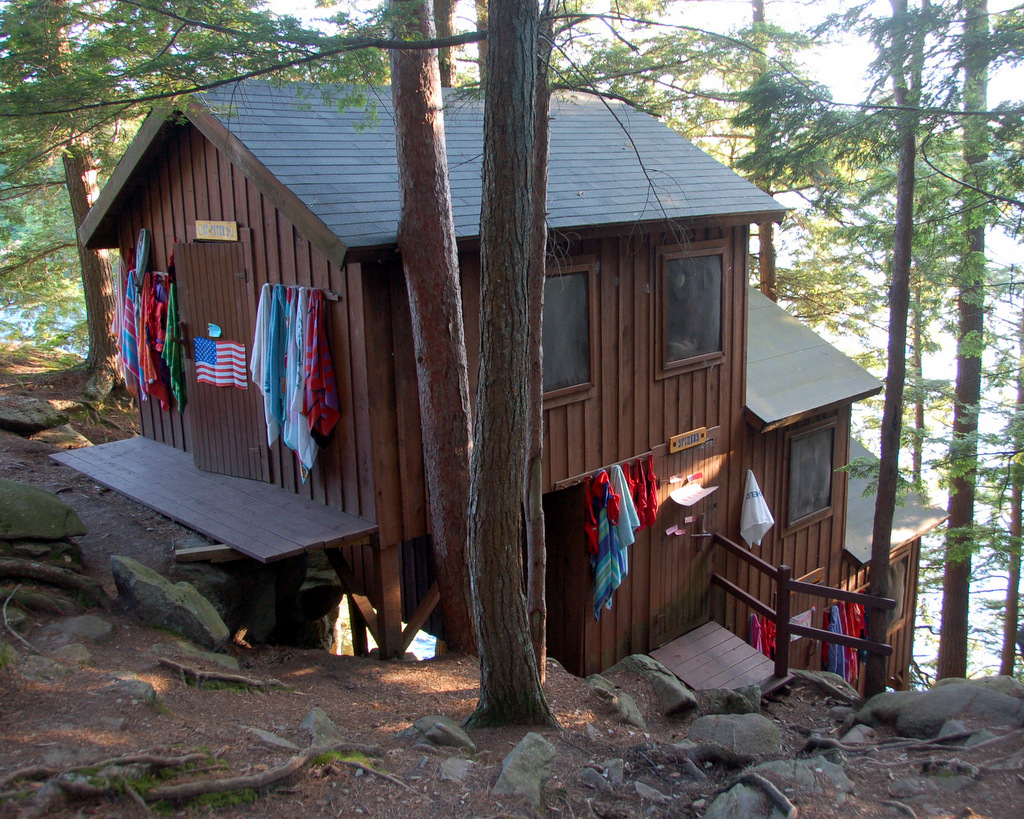
Lying half asleep on my cot, I hear the first stirrings of the day as the sunlight peeks into the cabin.  Those first rays of sun are accompanied by the chirping of birds, and soon followed by a cabin waking up.  Yes, truly, it seems as if the cabin themselves wake up each new day at summer camp.

First the rustling begins as campers move about half asleep on their cots.  A blanket slips onto the floor here, a sleeping bag doubling as a comforter swishes over there. Next comes the all out tossing and turning of campers, as one by one sleep drops from their eyes and their eyelids flutter open.  

Soon a book or a flashlight can be heard hitting the cabin floor with a thud as it is knocked from a cubby amid the restlessness. The clunk leads to a quiet giggle, which is accompanied by a whisper across the bunks and soon thereafter the quiet “thump, thump” of stuff animals being tossed from one bed to the next.

The giggles quickly compound and the chirping of the birds fades into the background as whispers and muffled giggles ping off the cabin walls.  A footfall on the wooden floor and the pitter-patter of small feet heading for the cabin door tap past my bedside as I keep my eyes closed, enjoying the sounds of a cabin coming awake.


As the cabin door creaks open, the reveille bell simultaneously rings out and the whispers quickly turn to happy voices and a cascade of laughter.

A cabin has awoken in the woods of Maine.

Tuesday, February 11, 2014

In a word: Relationships

A word cloud formed from blogs on the value of overnight camp for campers and counselors conveys the essence of camp, and perhaps, of life—relationships. 

Relationships with friends and campers and counselors, and yes with parents too.  

Relationships with counselors who live in the moment and serve as valuable role models for children. 

Relationships among campers who learn and grow to meet their potential, who arrive with trepidation and leave camp with memories and lives changed through the relationships they form each summer.

Relationships between children and parents who give the gift of summer camp knowing a child can gain more self-confidence and responsibility in a few weeks of summer fun than nearly anywhere else in life.

Look into an overnight summer camp experience for your child this year.  

The blogs on which this cloud are based:

Wednesday, June 26, 2013

A Smooth Camper Drop-off

Taking a daughter to camp, especially the very first time, can be as exciting and worrying for the parent as it is for the camper.  The key to a successful drop off on the first day of camp is to ensure both your and your child's needs are met in the transition. For your child, she needs to integrate with her peers and make a connection to camp life so she has a focal point other than the goodbye.  Whether your child is clingy or independent, you need to balance giving her space and support to make that camp connection. Your child can sense if you are distressed about leaving her, so it's also important for you to assure yourself that your child is in good hands.  

A few tips for balancing your needs and your child's needs on the first day of camp:
  • Meet her counselors— learn their names
  • Meet any cabinmates who are around
  • Introduce yourself to other parents—this gives your daughter time to connect with her peers on her own
  • Help your daughter arrange a few items—maybe a photo she has brought from home, a jacket or laundry bag hung up. This setting up is truly more for the parent than the child. A parent wants to visualize her daughter’s space. For a camper, setting up is just a transitional pause before merging into camp life.
  • Well run camps will have transitional activities for the arriving campers whether they head directly to a meal, an activity or gather for a craft. And a counselor who is well trained will create a transition.  When she does, take your cue and depart with a quick goodbye.
  • Leave a card and small gift—a book, card game, activity book—for her on her bunk as a surprise when she returns to her cabin.
  • Smile as you depart—you want your daughter to think of you as happy that she’s at camp

Thursday, April 12, 2012

Overlooked Items to Pack for Camp

T shirts, check. Jeans, check. Sweatshirt, check. Books to read, check. Remembering the top of mind items to pack in the trunk is fairly straightforward. It’s the camp necessities that we rarely, if ever, use at home that are easier to forget.

Here is a short list of essentials for all overnight campers, whether you are heading off for one week or seven. While most of the items, if not all, are on the packing list your camp sends out, these are the items I most often see forgotten.

  • Laundry bag—even if laundry won’t be done while your camper is at camp, it’s helpful to have a separate place to throw dirty clothes other than under the cot. 
  • Sneakers, or to some Tennis Shoes—if your camper will be on a tennis court at all then ensure she has appropriate footwear. At home she may wear sandals everywhere, but at camp she will need sneakers around camp and sometimes court shoes for the tennis courts. 
  • Water bottle—often you can purchase one with the camp logo, but having a water bottle is handy whether your son is planning on joining in on hikes or just wants to have water next to his bed at night. 
  • Pre-addressed envelopes—not only does having address labels increase the chances that your child will write you (or his cousin, grandfather, little sister), but it GREATLY increases the odds that the address will be sufficiently legible to make it through the postal system. 
  • Headlamp—juggling toothbrush, toothpaste and a flashlight isn’t easy. Get a headlamp in addition to or in place of a flashlight. 
  • Sunscreen and bug spray that your child can apply. If you have a young child then it’s easier to apply stick-based sunscreen on her face, rather than lotion.

Monday, October 3, 2011

Connecting with Camp as the Days Shorten

October is here and the long lazy days of both last and next summer seem ages away. Yet out of sight doesn’t need to be out of mind for summer camp. Especially for kids who are making a transition to a new home or a new school, maintaining connections with summer camp friends can offer comfort and confidence.

The following are a few ways your child may want to maintain his or her summer camp connections.

Camp websites: Many summer camps keep photos posted from previous summers. Sit with your camper and go through the photos, allowing her to tell you the stories the pictures invoke.

Camp gatherings: Find out if your camp hosts local reunions or visits camp fairs in the fall or winter.

Visit a camp friend: While it may seem like camp friends are scattered far and wide, many may be living in the same state—perhaps only an hour drive away. Help your camper plan a visit for a weekend with a camp friend.

School assignments: Innumerable school assignments are ideal for a camper to reminisce about summer camp. Whether writing a third grade poem on riflery at the camp range or composing a personal essay for a college application, summer camp offers a plethora of topics for completing assignments.

On-line: If your child is old enough to use a facebook account, keeping up with camp friends is easy and immediate. Or simply sending emails can keep a friendship current.

Postal Mail: And every camper is versed in writing letters and sending them via the post office. There’s nothing like finding a personal letter from a camp friend in the mailbox!

How do you keep in touch with camp friends after camp has closed?

Monday, August 1, 2011

Visiting Summer Camp

August is a great time to visit summer camps in Maine—visit in the next few weeks and you are likely to find the camps full of campers immersed in activities, working for honors, and playing in the water with friends. While a winter camp fair is a good place to ask the camp director lots of questions about camp (see Questions to Ask), a summer tour is more about gaining an appreciation for the pulse of the camp. Is this a place where your child would thrive in the summer?

A few tips to get the most out of your visits:
  • Call ahead to let the director know you are coming. She or he will most likely be able to set aside some time to show you around or have another staff member show you camp.
  • Bring your child with you!
  • Ask when the best time is to visit. Right after lunch may fit your schedule best, but you may find that lunchtime at camp is later or the campers are at rest. You will likely get to know the camp best when the campers are engaged in activities.
  • Find out if there is a weekly campfire or other gathering on the day you are visiting. There may be other parents who will be around camp at the same time who may be able to answer some of your questions as a parent.
  • Find out if the camp has each family tour camp together or offers prospective campers a chance to interact with current campers without their parents. If so, talk to your child in advance so she isn’t surprised by the separation.
  • While the staff likely is very happy to answer your questions, take the time to simply get the feeling of camp—is the energy level what you are looking for, do the campers look happy, are the variety of activities ones your child may be interested in trying?
  • Finally, while summer camp can certainly help build lifelong friendships and skills, this isn’t a college tour and your child may be a bit overwhelmed to approach campers and strike up a conversation. Let your child simply absorb the place; selecting a summer camp is a decision that a parent can make.

Wednesday, July 13, 2011

New Approach to Care Packages

The campers cluster around the mailboxes, eagerly scanning the newly posted package list. “Yeah I got one!” “Lily you got a package!” “YES!” can be heard as the campers spot their name or a friend’s name on the list. Often simply receiving a package is more important than the contents.

However, having sent numerous care packages over the years, and having covered the basics, I was looking for a new approach to putting together a package. My daughter’s camp discourages sending food and the Mad Libs have come home empty in past summers. My daughter hasn’t even had time to read the books she went to camp with. So what to send?

Rather than heading out to the store, I decided to look around the house to see what I could send.  I opened the junk drawer in my kitchen and peered in. I considered each object in turn:
  • Cool pad of paper—check, that could easily be included
  • Fun colored pens—pens are always running out, I put them in
  • Rocks—okay there are plenty of rocks at camp, leave those in the junk drawer
  • Bouncy ball—sure, small, lightweight, fun
  • Rubber bands—hmm, not sure that would be so exciting
  • An unused skein of gimp—so many uses, sure, I dropped it in the bag
  • And way in the back—an old riddle book—paused and read that for a bit. This one had probably been forgotten about and would be enjoyed as if it were new.
I have only just sent the package, so I don’t know yet how well it was received. Guess I’ll just have to wait by my mailbox for a return letter. If you give it a try let us know what you find and how well it was received.

Saturday, July 9, 2011

Our Comfort Zone

The trunk is pack and loaded into the back of the car with a few stuffed animals perched on top. You’re driving on I-95 north to take your daughter to summer camp for the first time. Your daughter has been sitting quietly in the back seat; she didn’t eat any breakfast, so you know the butterflies are increasing. Yours too. You’re proud that you haven’t teared up in front of her yet. Then you hear the lyrics on the radio, “That’s my daughter in the water every time she fell I caught her. Every time she fell.” The tears fill your eyes; you blink them back so you can keep driving as a lump forms in your throat, and change the station.

Taking a child to camp for the first time is a huge transition—and not just for the child who will be making choices on a daily basis without parental input. Summer camp is also a significant transition for a parent. For many parents, having a child attend summer camp is outside of their comfort zones. You will miss chatting with him at breakfast, playing hopscotch in the driveway, tucking her in at night. Acknowledge your feelings with someone who shares your parenting values; someone who also appreciates the friendships, confidence and life skills that can blossom in a summer camp experience. As parents we need to reach outside of our comfort zones at times to make the world a better place, to live life to the fullest, to do our best as parents.

Recognizing that taking your daughter to camp is as momentous for you as for her, is important. You can help her by being positive and realistic. It’s okay to let your camper know that you will miss her, but you also need to reassure her that you will be fine while she’s at camp. Once you get your child settled at camp and you are back home, take time to let your rush of emotions envelop you. Call a friend who has camper children and share your turbulent feelings of change. Go for a run and talk out loud. Summer camp is a major transition for the camper and her parent, one that can have a positive impact for both of you as well as your relationship with one another for years to come.  What worked for you after taking your child to camp for the first time?

Thursday, July 7, 2011

Responding to A Sad Letter from Your Camper

Elation: Opening your mailbox and finding a letter from your camper!
Deflation: Reading the letter and discovering that she’s lonely or homesick or feeling left out.

Receiving a sad letter from your camper is difficult and highly emotional. Often it is best to set the letter aside and think—perhaps even talk out loud with a spouse or a friend before responding. Consider whether the incident or concern is urgent and you need to call the director, or is your camper just experiencing a low because he wasn’t recognized at the weekly camp fire or she still hasn’t learned how to do the back float and everyone else can?

If you feel you need to call the camp director keep in mind that you have only received one side of the story. Be certain to ask for the director’s perspective. For more suggestions on calling the camp director read an earlier post Calling the Camp Director.

If, on the other hand, writing a letter in return is appropriate here are a few guidelines:
  • Acknowledge Your Camper’s Feelings 
      What seems like a minor matter to you, is often a much larger issue from the perspective of a 10 year old.
  • Stay Constructive 
     “What a jerk he is!” may make you feel better momentarily, but is unlikely to help your camper find a positive resolution. Perhaps you can suggest she talk with her counselor or another adult she is close to at camp.
  • Remember that Dealing With Interpersonal Issues is Part of the Camp Experience
     Offering parental guidance in moderation can be helpful. But keep in mind that learning how to deal with non-life threatening situations on her own is part of the value of sending your daughter to camp.
  • Be Aware Time Keeps Moving Forward
     From the time the incident occurred and your daughter wrote and mailed the letter, until you received the letter and finally until she receives your response could be up to a week( or more if you’re in Canada and there’s a postal strike!)  In that amount of time any number of personal transgressions may have been resolved. Consequently, dwelling on the topic for an entire sheet of paper may be excessive. Address the issue, let your camper know you care and are here for her, and then move on. Include a funny story from your childhood if that is helpful. Or add a riddle or joke or something light to bring a smile or laugh.

If you stay positive, your child is more likely to internalize your positive outlook and be able to deal with whatever issue may have come and gone by the time your letter is received.